Menovky

Zobrazujú sa príspevky s označením Istanbul. Zobraziť všetky príspevky

pondelok 25. decembra 2017

How to Get an Istanbul Kart


Istanbul Kart (Istanbul Card) is in essence an all-round public transportation boarding pass. To immediately answer the question raised in the title: yes it is worth getting one if you plan to use (the advantages of) public transportation multiple times during your stay in Istanbul. So, unless you prefer to do everything on foot or take a taxi to get around, please do continue reading to find out where to get it, how to use it, and the advantages it has.
What is Istanbul Kart?
The card was introduced in 2009. It’s a contact less or RFID (Radio-frequency identification) card for public transportation fare payment. It has the exact same size as a regular credit card, so it fits perfectly in your wallet. The card is pre-paid and easily rechargeable.

The Advantages of Istanbul Kart
There are quite a few advantages to getting an Istanbul Kart as opposed to buying tokens or ticket every time you’re going to use public transportation.
 
1. Multi-Purpose — This single card enables you to pay for multiple types of transportation: buses, metros, ferries, funiculars, and tramways (yes, even the nostalgic one running on Istiklal Caddesi). Moreover, most of these transportation types no longer accept cash payments, so you’ll have to buy some kind of token or ticket before boarding anyway.
 
2. Pre-Paid — Istanbul Kart is a prepaid and rechargeable card. This means that you don’t have to stand in line (and maybe miss the bus or tram) to get a valid boarding pass every time you plan to make use of public transportation. And uploading more credits can be done at designated machines, most of the times without a queue in front of you.

3. Ease of Use — It is not necessary to bring the Istanbul Kart in contact with the reader. You can pay for your fare by ‘waving’ the smart card within 8 cm (3.1 in) of the reader. In most cases you don’t even have to take it out of your wallet, purse or light hand bag. Upon making a successful payment, the reader will make a sound and the screen will light up showing the amount left on the card. In case of insufficient funds, the screen will read Kontör Yetersiz.
 
4. Multiple Travelers — There is no need to buy multiple cards since one Istanbul Kart can be used

for up to 5 passengers. After paying the fare for the first passenger, let him or her hop on or pass through the turnpike, wait a few seconds, and again wave the card in front of the reader.

5. Discounts — By using the card, you already benefit from a 10% discount over the normal fare. Instead of paying 5 TL per ride, you pay 2,6 TL. And there is more. You can make up until five transfers/connections within a two hour period, and you’ll pay less for every transfer, already only 2,4 TL for the first transfer.
 
Where to Get an Istanbul Kart
The easiest way to get the Istanbul Kart is at major transit stops such as the airport,Sultanahmet, and Eminönü. To buy an Istanbul Kart, you need to pay a non-refundable 10 TL fee (for the actual card and the service), and of course an amount of your choice to load onto the card.
How to Reload the Istanbul Kart
To reload the card, you can either go to newsstands and small shops (look for the phrase Akbil Dolum Noktası) which offer this service, use self-service special purpose machines at major transit stations. The machines accept notes of 5, 10, 20, and 50 TL and have instructions in multiple languages


nedeľa 24. decembra 2017

Celebrating Christmas in Istanbul By Erlend Geerts

Celebrating Christmas in Istanbul 

The roots of Santa Claus lay in Turkey, to be precise in Patara near Myra. Already in the 4th century A.D.E. St Nicholas dropped bags of money down the chimneys to help people. But today, in a country with a 98% Muslim population, Christmas is a day like any other day. Yet, spending Christmas in Istanbul is not that odd an idea — here’s why.

5 Reasons Why Istanbul Is a Nice Christmas Destination

  • Christmas Decoration — Starting mid-December, streets and stores are decorated in a similar fashion Western countries do for Christmas. You’ll find plenty of Christmas trees, (street) lights and even an occasional Santa Claus. Not that Turks celebrate the birth of Christ; they’re just gearing up for New Year celebrations. But the atmosphere leading up to that day is similar to what we’re used to for Christmas in the West.
  • No Christmas Hype — You can enjoy the Christmas atmosphere without all the commercial elements. I personally don’t miss 30 repetitions a day of Jingle Bells or White Christmas, just to name a few. There simply aren’t any special celebrations, except for masses held at some churches (see below).
  • Lesser Sightseeing Queues — In Istanbul, December 25th is business as usual. In other words, Istanbul spends the festive season in much the same way as it always does: bustling and at your service. Not only are all the historic sights open, on top of it they are fairly quiet with pretty short queues — a blessing.

  • Christmas Masses — If you wish to attend a special Christmas mass, that’s no problem. Just go to Anthony of Padua, the largest Catholic church in Istanbul. It’s located on Istiklal Caddesi, on your left as you walk from Taksim towards Tünel. On foot it will take about 20-25 minutes. To be on the safe side, please check out mass hours at least a day beforehand.
  • It’s Only a Week from New Year — Istanbul’s New Year celebrations are famous. On New Year’s Eve Istanbul is at full swing with restaurants, cafes, bars and night clubs fully booked. And if you prefer to celebrate outdoors, head for Nişantası‘s giant street party. So why not combine both year-end festivities while you’re here?

Why an Istanbul Christmas May Not Be Your Cup of Tea

  • Not Really Low Season — Istanbul’s winter is not the most attractive travel weather for the average tourist. Yet, the last week of the year hotel prices tend to rise a bit. Be on the lookout for early booking discounts.
  • It’s Winter Time — If you don’t like the summer heat, the festive season is a great alternative. But Istanbul winters can be wet and cold. To make sure you’ll have a fantastic time, pack something waterproof and wear lots of layers.

nedeľa 14. mája 2017

Rumeli feneri


Rumeli Feneri ya da resmî adıyla Türkeli Feneri,  İstanbul'un Avrupa yakasında İstanbul Boğazı'nın Karadeniz'le birleştiği kuzey ucunda yer alan deniz feneridir. Karşısındaki Anadolu Feneri'nden 2 deniz mili uzaktadır. Bu iki feneri birleştiren çizgi İstanbul Limanı'nın kuzey sınırını oluşturmaktadır Fenerin bulunduğu köy de aynı isimle (Rumelifeneri) adlandırılır.
Eskiçağlarda buradaki yerleşmenin adının Panion olduğu yönünde güçlü kanıtlar bulunduğu ileri sürülmektedir.
Kırım savaşı sırasında Fransız ve İngiliz gemilerinin Boğaz'ın ve Karadeniz'in girişlerini görebilmeleri için yapılmasına karar verilen fener 15 Mayıs 1856'da Fransızlar tarafından karşı sahildeki fenerle beraber kule kısmı yapılarak işletilmeye başlanmış. 1933'te Fransızlara verilen 100 senelik işletme imtiyazı iptal edilmiş ve tamamen Türklere geçmiştir.
Deniz yüzeyinden 58 metre yüksekte olan kule 30 metre boyundadır. Fener kulesi üç kademede inşa edilmiş olup lambası ilkin gazyağı ardından asetilen ile çalışmıştır. Günümüzde elektrik enerjisi ile aydınlanan fenere bütan gazı ile yedeği alınmaktadır. Fener beyaz ışığı ile 18 deniz mili uzaktan görülebilir.
Fenerin içinde Sarı Saltuk Dede'nin bir türbesi vardır.

Rumeli Feneri, a.k.a. Türkeli Feneri, a historical lighthouse still in use, is located on the European side of Bosphorus' Black Sea entrance in Istanbul, Turkey. Rumeli (or Rumelia) is a former name for Greek-speaking Eastern Roman Empire. It is across from the Anadolu Feneri lighthouse, which is on the Asian side of the strait at a distance of 2 nmi (3.7 km). In Greek myth of Jason and the Golden Fleece, the two islets these lighthouses were built were called the Symplegades. They clashed together randomly, destroying any ship who passed between them. A line connecting the two lighthouses marks the northern boundary of the Port of Istanbul. The place where the lighthouse is erected is named Rumelifeneri, which today is a fishermen's village in Sarıyer district.
The lighthouse was built by the French in order to provide safe navigation for the French and British war ships entering the Istanbul Strait from Black Sea during the Crimean War (1853–1856). The lighthouse went in service on May 15, 1856, together with its counterpart. It was run by the French until 1933 when the 100-year concession was cancelled and the Turkish authorities took over. Today, it is maintained by the Coastal Safety Authority (Turkish: Kıyı Emniyeti Genel Müdürlüğü) of the Ministry of Transport and Communication.
The lighthouse is situated on a hillside 58 m (190 ft) high above the sea level and the entirely white painted tower has a height of 30 m (98 ft). It is the tallest lighthouse in Turkey. The tower has the form of a two-staged octagonal prism. Initially, it was lit by kerosene that was later replaced by Dalén light using carbide (acetylene gas). Today, the light source is electricity, however, a butane gas lighting system is also installed for backup purposes. The Fresnel lens with 500 mm (1.6 ft) focal length allows the white light that group flashes every 12 seconds, a range of 18 nmi (33 km).
The lighthouse is listed in Turkey under the code "TUR-053" and its radio call sign is TC1RLH.


piatok 12. mája 2017

Şile


One of the loveliest districts of İstanbul, Şile is just Northeast of the Marmara Region and lies on the 60 km coast of the Black Sea shore which makes it a very desirable location for Summer holidays. It’s not only an escape from the city, for Şile offers its lovely natural spots, sightseeing and other wonders but it has become a permanent destination for those looking for an extended holiday season.


It is known that Şile and the regions around have been occupied since the Neolithic ages. Various areas that were also occupied from the Paleolithic ages have been discovered during an excavation in the Black Sea region between the border of Bulgaria and Kefken Island. The facts show that after the Ice Age, about 12000 and 6000 BC the shore of the Black Sea .


Places of Interest Near the Best Western Şile Gardens

The sea (150 m), Şile Lighthouse (4 km), Ağlayankaya (the Crying Rock/ 5km), Ağva (45 km)


Şile Castles

4 castles are within the area of Şile. Şile Castle, Sarıkavak Castle, Kalealtı Castle and Kalem castle, all built during the Byzantine period. Especially the Şile Castle which resides on the Ocaklı Island is worth a sight with its well protected tower and water warehouse.

Şile Caves

There are 30 natural caves in Şile’s district. Some of them are admissible for visiting. Sofular Cave is 100 meters long, 17 meters wide and is dry, horizontal cave dating from the Roman period. Meşrutiyet Cave, Yarığı and Şile Sea Caves are also touristic attractions.

Kumbaba Hill

Kumbaba Hill, located in central Şile, is a sandy hill that offers natural release and cure to Rheumatic disorders. With an attitude of 60, the red, orange iron/copper alloyed sand is also the home of the tomb of Kumbaba. During the Byzantine, people would sail with the palace ships to sunbathe on this hill. An ancient chemist known as “Kumbaba” discovered the sand’s natural healing powers and since then, the sands have been used for this purpose.

Lighthouse

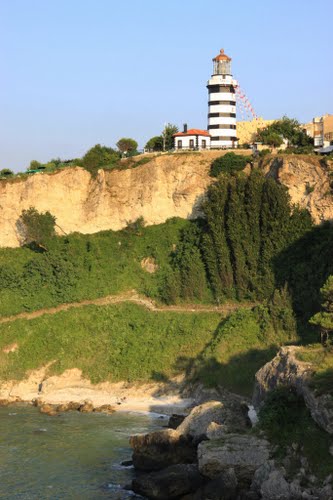
Serving the  Bosphorus as  well as  the  Black Sea, the lighthouse is  the biggest  in  Turkey  and  second  active bigest  lighthouse  int  world. Finished by 1859. It  is  bult like a tower  and resides on  top of  the  rock 60m above the water. 


The Crying Rock

The crying rock is a water resource about 600 meters behind the Şile Lighthouse. It has been named the crying stone as the rocks resemble a person’s tears and the sound of the water is said to be heard like sobs. The rocks are a wild and intoxicating sight.

Şile Villages

The most famous villages in Şile are Ağva, Kabakoz, Kerpe and Kumcağız, which are spread out on the coast. The Saklı (Hidden) Lake and the Gelin (Bride Rock) are just around the Ağva village and are featured in many myths and tales. Villages around the woods with many little rivers, a must-see location for those who like to discover nature and study photography.

The Eleven Lakes Valley

The first of the many can be reached at the end of Değirmendere Valley, which is around Hacıllı Village. The rest of the lakes are waiting for you to discover them just towards the end of the valley.

štvrtok 20. apríla 2017

Gözdağı tepesi


Gözdağı Sosyal Tesislerinin etrafı ağaçlarla kaplı çam ağacı kokusunun yoğun olduğu tepede gizlenmiş bu mekan; İstanbul, Adalar ve Yalova illerini tepeden gören,  güzel bir manzaraya hâkimdir. İBB Gözdağı Sosyal Tesisleri içinde ki kullanılabilir alanlar (piknik, seyir çardağı, çocuk parkı ve gezi yerleri) her gün doğal ortamda enerji depolayarak vakit geçirmek isteyenlere kapılarını açıyor.


İstanbul’un ikinci Çamlıca’sı olarak tabir edilen 400 kişilik kapasitesi olan bu güzel mekan özellikle İstanbul’u daha önce görmediğiniz bir açıdan seyretmek ve tertemiz bir havayı teneffüs etmek için idealdir. Ahşap mimarisinin yanında 360 derecelik manzarası muhteşem. Özellikle yemek olarak Gözdağı Kebabını tatmanızı tavsiye ederim. Gözdağı Kebabıyla karnınızı doyurduktan sonrada arkasına eğer tatlı isterseniz volkanik tatlısını tavsiye edebilirim. Etrafı kakaolu kekle kaplanmış, içinde sıcak çikolata ve yanında gelen dondurma ile tadı damağınızda kalacak….


This place is hidden in the hill surrounded by  the pine tree scent.  From  the  top  where  is beautiful view  we  can  see  large  Istanbul, Adalar and Yalova.  There  are available places for  picnic, viewing arbor, children's park and sightseeing places. 


The restaurant on  the  hill with a capacity of 400 people,  is ideal for watching Istanbul in a way that you have never seen before and breathing clean air. The 360 ​​degree view next to the wooden architecture is spectacular. I especially recommend you to taste the Kebab Kebab as a meal. I can recommend the volcanic dessert if you want to dessert after you feed your belly with Kebab Kebab. It will be covered with a chocolate cake, with hot chocolate inside and ice cream next to it will be on your taste buds ....


nedeľa 10. apríla 2016

Yoros Castle ... Yoros kalesi

Yoros Castle sits on a hill surrounded by steep bluffs overlooking the Bosphorus. It is just north of a small fishing village called Anadolu Kavağı, on Macar Bay, and the entire area is referred to as Anadolu Kavağı. This section is one of the narrowest stretches of the Bosphorus, and on the opposite shore sits an area called Rumeli Kavağı, which formerly held a fortification similar to Yoros Castle. (Anadolu and Rumeli were Ottoman terms for the Anatolian and European parts of the empire).

Yoros Castle was intermittently occupied throughout the course of the Byzantine Empire. Under the Palaiologos dynasty during the decline of the empire, Yoros Castle was well fortified, as was the Rumeli Kavağı on the opposite side of the Bosphorus. A massive chain could be extended across the Bosphorus between these two points, cutting off the straits to attacking warships, similar to the
 chain across the Golden Horn
which was used to defend Constantinople during the last Ottoman siege by Sultan Mehmed II.  The ruins of the citadel and surrounding walls still exist, though the mosque, most of the towers, and other structures are gone. Yoros Castle and the village of Anadolu Kavağı are a popular day trip from Istanbul. Normally, the site is not supervised and visitors are free to climb all over the ancient walls. However, there are currently archaeological excavations going on and visitors are unable to enter the castle. The military importance of the site cannot be overstated. In fact, much of the area surrounding Yoros Castle is today in the hands of the Turkish military, who have closed off areas to visitors.
The villagers of Anadolu Kavağı historically depended mostly on fishing for income, but it appears some may have acted as 'wreckers'. Turkish rumors report that they would light fires in order to disorient ships and ground them in the narrow straits, seizing their goods. Conversely, many claim that Anadolu Kavağı was also used as a shelter for trade ships against storms, where it is recorded even up to three hundred ships were serviced at a time.
Upon Sultan Mehmed II’s conquest of Constantinople in 1453, the presence of the Genoese at such a strategic location posed a threat to the new Ottoman capital. Within a few years, Sultan Mehmed drove the Genoese out. He then fortified the walls, and constructed a customs office, quarantine, and check point, as well as placing a garrison of troops there. Bayezid II (1481–1512) later added a mosque within the castle walls. Murad IV (1623–1640) refortified Anadolu Kavağı to defend against the fleet. Under Osman III (1754–1757), Yoros Castle was once again refortified. Later, in 1783 Abdülhamid I added more watchtowers. After this period, it gradually fell into disrepair. By the time of the Turkish Republic, the castle was no longer used.
It is a Byzantine ruined castle at the confluence of the Bosphorus and the Black Sea, to the north of Joshua's Hill, in Istanbul, Turkey. It is also commonly referred to as the Genoese Castle, due to Genoa’s possession of it in the mid-15th century.


Doğu Roma zamanından kalma Kalenin kapladığı alan İstanbul çevresindeki diğer bütün kalelerin kapladığı alandan çok daha büyüktür. İç kesimdeki kulelerin bazıları hâlâ iyi durumdadır ve duvarlarda Yunanca yazıtlar göze çarpar. Asya'dan gelen ve Karadeniz üzerinden Akdeniz'e ve Batı Avrupa kıyılarına ulaşan ticaret yolunu, 13. yy.'dan 15.yy.'ın ortalarına kadar ellerinde tutmaya çalışan Cenovalıların birkaç yerde gemilerine sığınak olmak üzere koloniler kurdukları bilinir. Bunlardan bir tanesi Kırım'da, Kefe'de, bir diğeri Anadolu kıyısında Amasra'da, en büyük ve önemlisi ise İstanbul'un karşısında Haliç girişinde, Galata'da idi. Ancak Cenovalılar veya halk dilinde söylendiği gibi Cenevizler, ticaretten başka bir şey düşünmeyen ve yapıcı olmayan bir topluluktu. Bizans'ın en zayıfladığı son yıllarda çok kısa bir süre için bu kaleyi de ele geçirmiş olabilirler. Fakat kalenin esas yapımı Bizans işidir.
Kalenin en yukarı kısmında, heybetli yarım yuvarlak iki burcun arasında, arkadaki araziye açılan bir kapısı vardır. Bu burçların dışarı bakan yüzlerinde işlenmiş salip ve bunun kolları arasında grek yazısı ile Hz. İsa'nın sıfatını ve adını belirten harfler görülür. Aynı girişin iç tarafında ise, yine mermer üzerine işlenmiş bir levha üzerinde takım grek harfleri vardır ki, bunlar ''despot Manuel'in unvan ve adını monogram halindeki harflerle belirtmektedir.
Türk ile

Anadolu Kavağı’nın boğaza nazır tepesinde bulunan Yoros Kalesi, tarihi ve turistik açıdan İstanbul’un en önemli miraslarından biridir.Yoros Kalesi yada Ceneviz Kalesi olarak adlandırılan kale yaklaşık 500 metre uzunluğunda ve 60-130 metre genişliğinde bir alana kurulmuştur.. Yoros Kalesi'nin adını, Yunanca'da dağ, tepe anlamına gelen "oros" kelimesinden almış olabileceği düşünülür. Ancak bu adın "kutsal yer" anlamına gelen Hieron'dan geldiği görüşüde oldukça yaygındır.Antik çağ tanrılarından Zeus'un sıfatı olan "uygun rüzgarlar" anlamına gelen ourios'tan geldiği de iddia ediliyor.
rleyişi sırasında kale fethedilmiş ve buraya bir Osmanlı kuvveti yerleşmiştir. 14. yüzyılın başlarında, 1305'te kale, Şile Kalesi ile birlikte Türklerin eline geçmiş, ancak fazla bir süre elde tutulamamıştır. 1348'den itibaren de, Karadeniz ticaret yolu hakimiyetine sahip bulunan Cenevizliler buraya hakim olurlar. Fakat 14. yüzyılın sonlarında, Boğaziçi'nin Anadolu yakasına tamamen hakim olan Osmanlılar tarafından tekrar fethedilmiştir.
Bilindiği kadarıyla, kalenin içinde yerleşen garnizon ve Türkler için evler yapıldığı gibi, bir de II. Bayezid zamanında cami ile hamam inşa edilmiştir. Bugün bunlardan hiçbir iz yoktur. Kalenin bir duvarının aşağıda boğaz kıyısına kadar indiği anlaşılıyor. En yukarı kısımda ise, bu bölümü ayıran 3 burçlu bir perde duvarı vardır.
Ermeni yazar P. Ğ. İnciciyan, 18. yüzyılın sonları, 19. yüzyılın başlarında Yoros Kalesi içinde 25 evlik bir Türk mahallesi bulunduğunu, ayrıca muhafız olarak bir dizdar idaresinde 20 kişilik bir müfrezenin de burada kaldığını bildiriyor. Yoros Kalesi, 19. yüzyılda bir kez daha terk edildi.
 
Evliya Çelebi ise verdiği bilgilerde kavak kasabasının içinde siyah renkli olan kalenin Yıldırım Han tarafından fethedildiği, Fatih Sultan Mehmed tarafından tamir edilip içine asker konduğu, çevresinin 200 adım ve dört bir yanının kestane ormanı kaplı olduğundan söz ediliyor.
Sarıyer'in tam karşı kıyısında bulunan kale sunduğu muhteşem Karadeniz ve Boğaz manzarasıyla ziyaretçilerini adeta büyülüyor.
Doğudan batıya, 500 metre kadar bir uzunluğu olan Yoros Kalesi, Karadeniz'e paralel olarak araziye yerleşir. Kalenin genişliği 60 - 130 metre arasında değişir. Bu tahkimat, Boğaz tarafında olanı daha alçak iki tepenin üstünü kaplar. Kalenin en güçlü kısmı, yüksek tepenin, doğuya, yani Anadolu'ya bakan tarafıdır. Bu da Yoros Kalesi'nin, Boğaz girişini kontrol etmek kadar, kara tarafından gelecek bir tehlikeyi karşılamak üzere düşünüldüğünü gösteriyor.